ZuriQ, a Swiss quantum computing startup spun out of ETH Zürich, raised $25.5 million in seed funding led by Quantonation, with participation from Forward.one, Extantia, Firgun Ventures, and existing investors. The investment follows a $4.2 million pre-seed round in 2025 and will support team expansion, research, and development of scalable trapped-ion quantum processors.
Advancing Two-Dimensional Quantum Computing
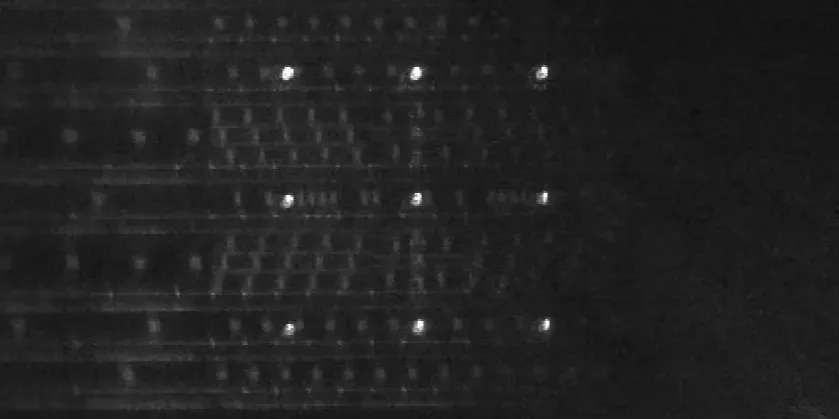
ZuriQ is developing a native two-dimensional trapped-ion architecture designed to overcome the scalability limits of conventional one-dimensional quantum systems. Using Penning micro-traps and static magnetic fields, the company enables more flexible ion movement and higher qubit density. A working demonstrator featuring a 3×3 array of nine individually controlled ions has already been developed in collaboration with ETH Zürich.
“What makes this approach powerful is geometry,” said Professor Jonathan Home of ETH Zürich, and a scientific adviser to ZuriQ. “Hold ions in a line and the count grows one at a time; hold them in two dimensions, and it grows with the area of the chip — on a standard chip, that is the difference between tens of ions and many thousands. Just as important, the ions can be moved freely in three dimensions, so they can be connected together far more flexibly, and that connectivity is what ultimately makes a quantum computer more capable. Reaching the scale and connectivity that real applications will need has been the central challenge for the whole field.”
Accelerating Commercial Scale
The new funding will help ZuriQ expand manufacturing, grow its engineering team, and increase the number of qubits supported by its processors, paving the way for industrial quantum computing applications.
“The trapped-ion companies that started the race began with one-dimensional designs that were useful stepping-stones, but the real challenge is whether they can successfully pivot to two dimensions as they attempt to scale,” said Dr. Pavel Hrmo, co-founder and CEO of ZuriQ. “We spent longer in the lab, and that time allowed us to identify an alternative route that is inherently easier to scale. Our architecture is two-dimensional from the ground up, so the number of qubits we can place on a chip will grow far more readily than in systems built on a legacy blueprint. This funding lets us turn our technical momentum into commercial scale with more people, more research, and an accelerated path to industrial applications.”