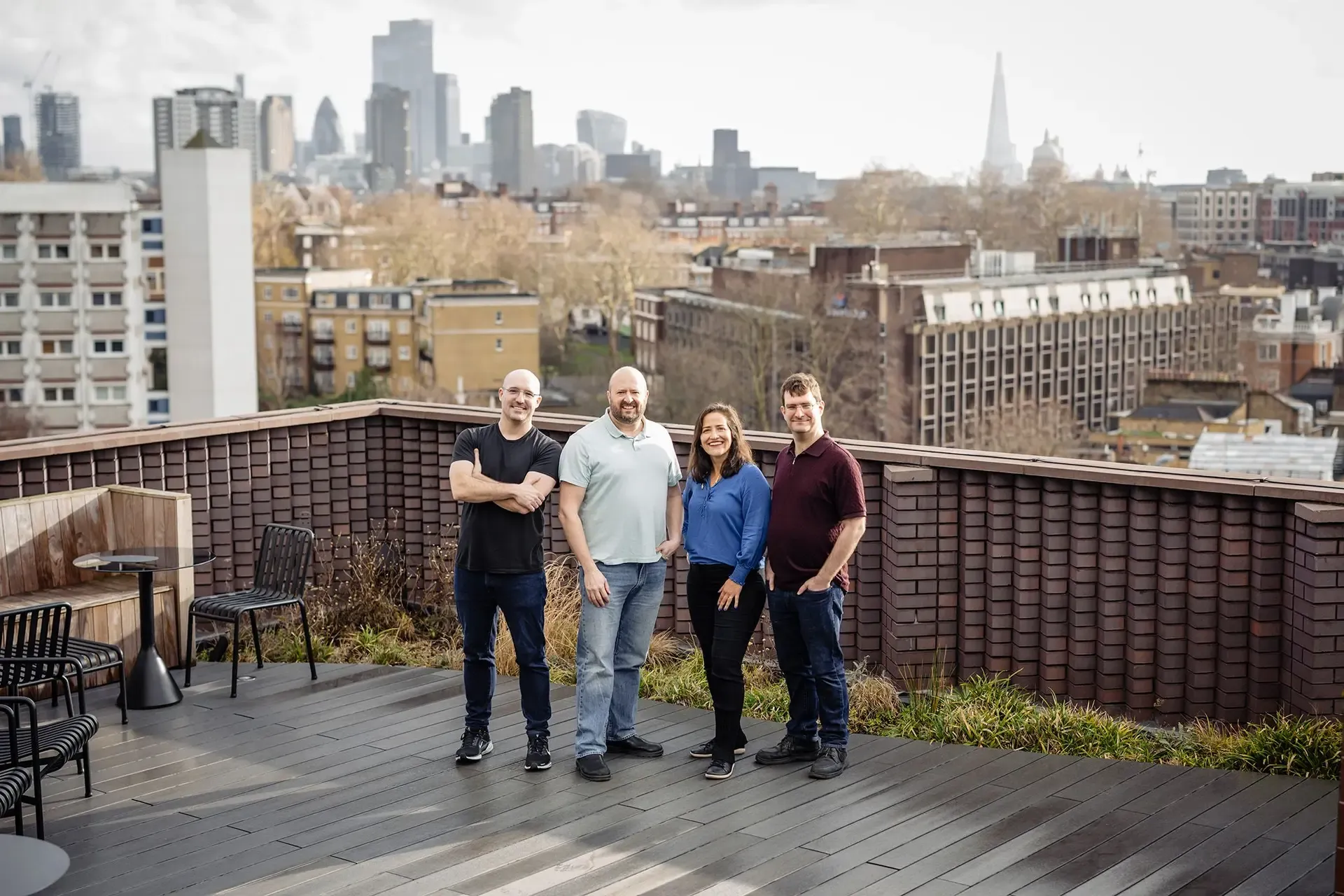
Founded by a team with deep, first-hand experience building a number of Facebook’s core products, including developing Workplace into a platform adopted and relied upon by some of the world’s most successful businesses, Slashwork has emerged from stealth with a new approach to how teams communicate. Designed for work that is distributed, increasingly shaped by AI and for teams that need to operate both in sync, but also on their terms and in their own time.
A New Model for How Teams Communicate
The $3.5m round was led by London based media and tech VC specialists 20VC, with participation from a group of senior technology operators and founders spanning Facebook, Slack, Intercom, Dropbox, Microsoft and beyond. Angel investors include Sandberg Bernthal Venture Partners (Sheryl Sandberg’s VC, Facebook), Cal Henderson (Slack co-founder), AJ Tennant (Slack GTM lead, Glean, Facebook), Carolyn Everson (Permira, Disney, Facebook), David Fischer (Facebook), Des Traynor (Intercom co-founder), Will Shu (Deliveroo), Soleio (Dropbox, Facebook, Figma), Philip Su (Facebook, Microsoft, OpenAI), Blaise DiPersia (Facebook), Olivia Calvert (Deel) and others.
Built by the People Who Scaled Workplace Communication
Founded by Jackson Gabbard (CEO), David Miller (CTO) and Josh Watzman (CEngO), engineers who all helped build and scale some of Facebook’s key products, Slashwork is now beta-testing with a small group of design partners. Julien Codorniou, who led Workplace before becoming an early-stage investor at 20VC, has overseen the incubation of the business and driven its investment and global go-to-market strategy to date.
Having spent years building communication systems for some of the world’s largest and fastest-growing organisations, the founding team and their investors saw first-hand how internal tools shape culture, alignment, and performance. With deep experience across many companies, teams, and tool stacks, Slashwork addresses a common problem: the tools people rely on to communicate at work no longer reflect how work actually gets done.
“We didn’t leave Facebook thinking we’d build another communication tool,” said Jackson Gabbard, CEO and co-founder of Slashwork. “But we found teams are doing enormous amounts of busy work just to feel aligned — checking umpteen channels and threads, worrying about what they’d missed. That isn’t a people problem. It’s a software-defaults-define-your-culture problem.”
Reducing Noise, Preserving Meaning, and Using AI with Intent
Slashwork was built to address that gap. Designed to enable not overwhelm, the platform is real-time when it matters, focused on reducing noise, preserving shared understanding, and helping information last beyond fleeting conversations. Rather than forcing people to keep up with everything, Slashwork surfaces what matters to them, in context, over time.
Crucially, the team believes recent advances in AI make a fundamentally different model possible.
“AI shouldn’t mean faster noise or more automation layered onto broken tools,” said Gabbard. “Used properly, it can remove the cognitive load that gets in the way of good judgment — helping teams coordinate work, follow up, and act with clarity, without losing human ownership.”
The platform is designed for fast-moving, tech-first organisations that want communication to support focus, build confidence and momentum, rather than fragment it.
Julien Codorniou, General Partner at 20VC and behind this incubation project, said: “Very few teams understand workplace communication at scale from the inside. This group has lived it; what worked, what broke, and why Slashwork reflects a hard-won point of view about how teams need to operate now, not how tools were designed a decade ago.”
Slashwork is working closely with a small number of technology-focused organisations, as early design partners, to refine the product ahead of a wider rollout later in 2026.
With deep technical experience, exceptional investor backing and a clear belief that communication tools should reduce friction rather than create it, Slashwork is positioning itself as a new foundation for how modern teams work — clearer, calmer, and built for the realities of today’s workplace.