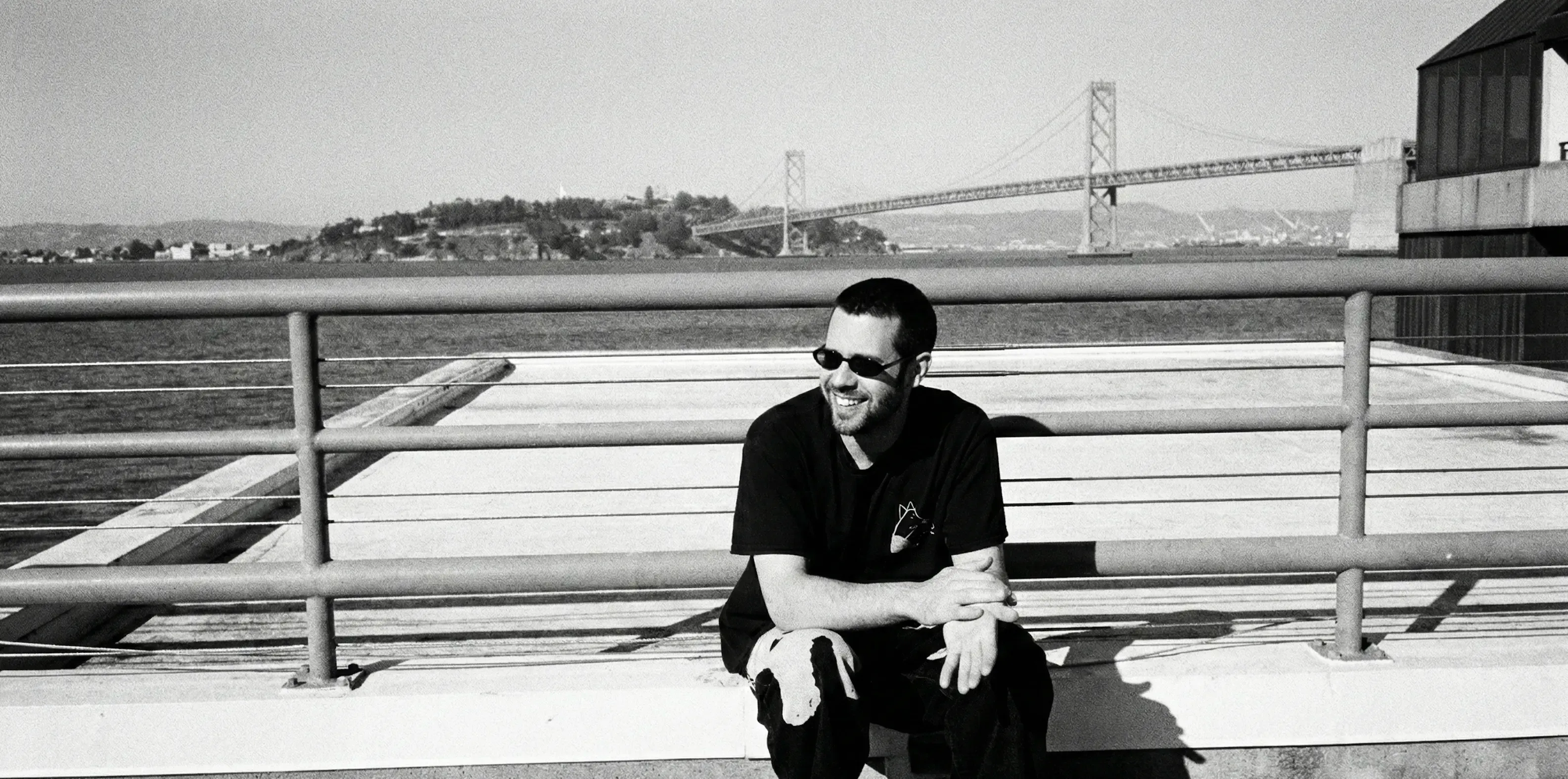
BeHard founder Zakhar Azatian on building consumer products as systems, monetizing early, and treating growth like an engineering discipline.
Zakhar Azatian is a San Francisco – based technical founder and the creator of BeHard, a gamified accountability app built around lifestyle challenges. A two-time founder with a prior exit, he has scaled bootstrapped B2C mobile products to more than 1 million users.
Anna Lebedeva: You’re a technical solo founder in San Francisco — and bootstrapped. Why choose that path instead of raising venture capital?
Zakhar Azatian: I’m not opposed to investment in principle. I just care a lot about freedom, especially freedom over what I build and how I build it.
BeHard became profitable early, which meant we didn’t have to depend on outside capital to move forward. That gave us space to focus on the product instead of managing burn.
We treat revenue as fuel. We make money, then immediately reinvest it into growth. There’s no artificial burn rate, just a loop where the business funds itself.
You’ve had a prior exit. What did that experience fundamentally change about how you build companies today?
It made me much more pragmatic. Earlier in my career, I overvalued ideas and underweighted execution speed. After an exit, you realize outcomes are driven by systems, not inspiration.
Now I focus less on building something “impressive” and more on building something that works, something people actually use, pay for, and come back to.
You’ve said that “real consumer products” are built differently than most people think. What actually matters in B2C right now — and what are founders overestimating?
Product alone isn’t enough anymore. The market is oversaturated, and everyone is fighting for attention.
What matters is building a repeatable system: product, marketing, and experimentation working together. Founders often overestimate the importance of a big launch or a single idea. They think they need to invent a new market.
In reality, the winners build a factory of experiments. The product is never finished, it’s a continuous stream of tests, both in the app and in distribution.
And distribution matters. If you don’t understand organic social, ASO, influencer marketing, or paid acquisition, it doesn’t matter how good the product is. If you just build it, they won’t come.
BeHard has reached more than a million users. When did it start to feel like a real product–market fit?
There wasn’t one moment. It became real when we consistently saw proof from users.
That meant reviews and interviews where people described concrete outcomes — losing weight, changing their diet, breaking addictions, even using the app for accountability after medical procedures.
We also saw strong behavioral signals. People repeated challenges. They invited friends. That social loop made it clear we weren’t just getting installs, we were building something that stuck.
You describe your approach as a “factory of experiments.” What does that mean in practice?
It means you don’t just try ideas, you build a process that continuously produces tests, learning, and improvement.
BeHard v1 was built in a week. It was extremely simple: black and white, just a checklist. Everything since then is the result of hundreds of experiments not just in the product, but in marketing too.
On the growth side, we define our channels TikTok, Meta, and others research what works on each platform, and build libraries of creatives to identify patterns. We run around 500 creatives a month. Large consumer products often run closer to 4,000.
You launch, see what sticks, kill what doesn’t, and iterate on what works. It’s more mechanical than artistic.
How do you decide which experiments are worth running — and when to kill them?
Speed matters. Depending on the platform, we often decide within a day or two.
We look for early patterns. Simply copying competitors rarely works; what tends to perform is a proven idea adapted to our specific product and audience. If something doesn’t meet our metrics quickly, we shut it down. If it does, we scale either budget or iteration speed.
As a solo founder, how do you balance speed with quality? What does your weekly operating cadence look like?
Quality comes from iteration, not perfection.
Most weeks revolve around three things: shipping product changes, launching experiments, and reviewing data. I batch decisions aggressively and avoid unnecessary context switching. Being solo forces clarity if something doesn’t move the needle, it doesn’t get time.
You monetize early and treat revenue as fuel. Why is early monetization so important in consumer apps?
Unless you’re trying to win a monopoly by burning massive amounts of capital, revenue is your only real fuel.
The loop is simple: revenue, reinvestment, new users, more revenue. Without that loop, growth stalls.
Many founders worry charging too soon will hurt growth. Did early monetization ever slow you down?
It didn’t slow us down — it validated us.
We reached $490,000 in monthly recurring revenue by focusing on value people were willing to pay for. Monetization forces discipline. If users pay, you know you’re solving a real problem.
What was the real growth engine behind your first 100,000 users?
We started a niche. We didn’t try to build a generic fitness app.
Focusing on a very specific audience made both the product and the marketing sharper. Once that worked, expansion became possible.
BeHard is built around challenge-based accountability. Why does that model work when so many habit apps fail?
Habit trackers assume you already know what to do and if you miss a day, nothing really happens.
A challenge is different. It has clear rules and a clear win condition. And with the restart penalty, break the streak and you start over it creates real accountability. For some people, that “all or nothing” structure is psychologically much stronger.
What surprised you most about user behavior as the product scaled?
Two things.
First, retention. People don’t just finish a challenge and leave, they repeat them, often multiple times, and often with friends.
Second, how unpredictable marketing can be. Small details like who appears in a creative can completely change which audience responds.
What belief about building consumer startups do you strongly disagree with?
“Build for everyone.”
If you start broad, you end up building for no one. It’s much more effective to start a niche and expand later.
I also disagree with the idea of “trying” marketing. You don’t try it, you build an experimentation machine and keep iterating.
If you had to start over tomorrow with no audience and no capital, what would you do first?
I’d start with a niche I personally understand and care about. Values matter whether that’s money, impact, or curiosity.
Then I’d do cold research with no ego involved. I’d assume competitors exist and go find them, using tools like Sensor Tower or Figures to understand revenue, geography, and competition. I’d avoid niches dominated by teams with massive budgets.
From there, I’d build a simple first version quickly, monetize early with a basic subscription, and reinvest everything into the growth loop starting with organic channels while building the experimentation factory from day one.