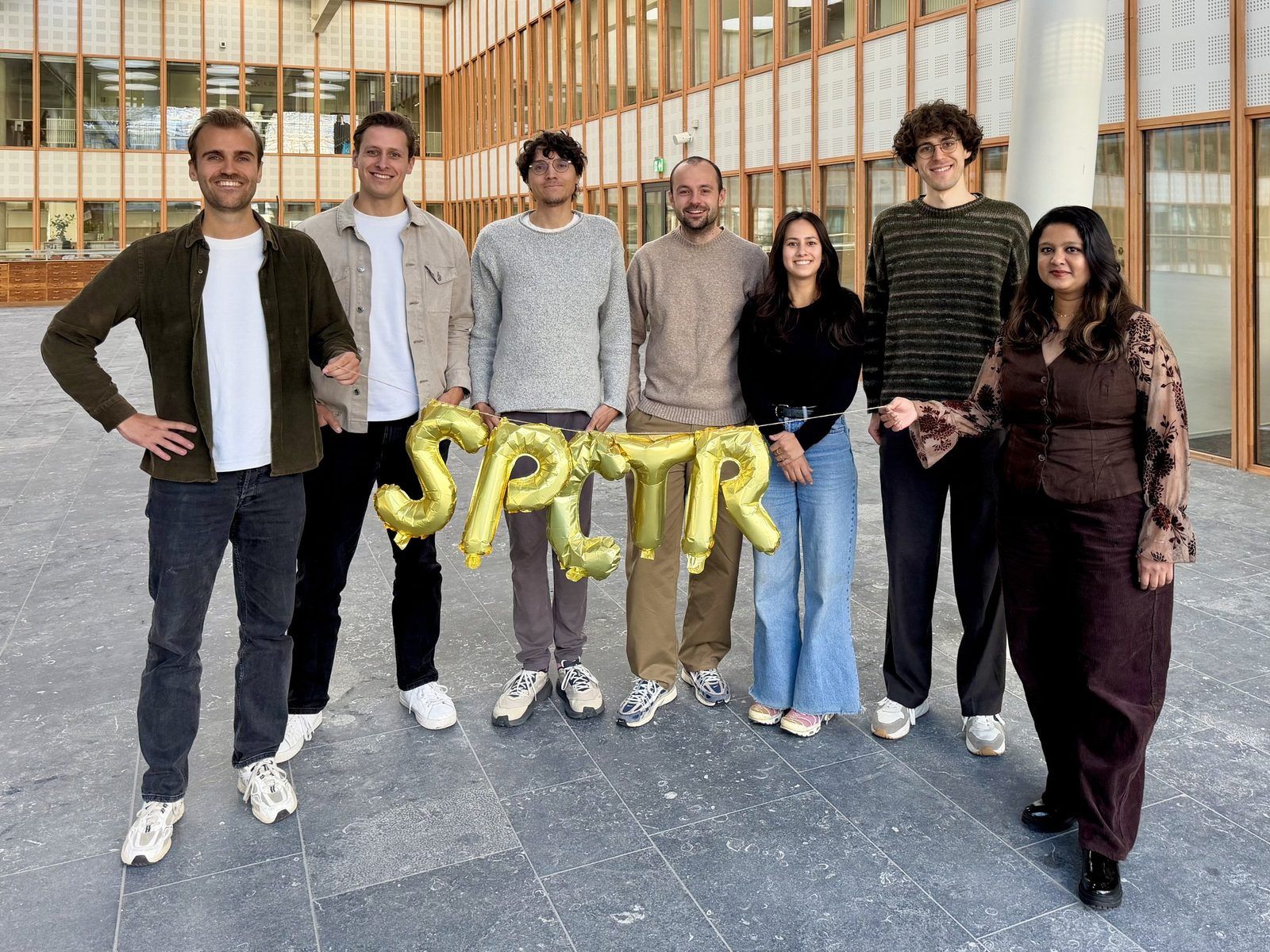
Dutch medtech startup SPCTR, based in Utrecht and Groningen, has secured €2.8 million in funding from the VGZ Voorop in Zorg fund, Future Tech Ventures, the Investment and Development Agency for the Northern Netherlands (NV NOM), a group of business angels and the European Just Transition Fund (JTF).
Founded in 2025 by Wido Heeman (CEO) and Rowan Timmermans, SPCTR develops AI-powered optical technology designed to help surgeons assess the margins of removed tissue during cancer surgery. The company currently employs eight people. Its device, SPCTRone, remains in development and is available exclusively within clinical research.
Bringing AI-Powered Margin Analysis Into the Operating Room
During cancer surgery, surgeons aim to remove all tumour cells while preserving as much healthy tissue as possible. However, whether tumour cells remain at the surgical margins typically becomes clear only several days later, following a pathological examination. If positive margins are identified, patients may require additional surgery or treatment.
SPCTRone combines optical imaging with AI to assess surgical margins during the operation itself, potentially allowing surgeons to remove additional tissue within the same procedure.
“Surgeons have to judge during the operation whether they have removed enough tissue, and only find out days later whether they were right. With SPCTRone, we want to bring that answer into the operating room. This funding enables us to evaluate the technology in multiple hospitals and to further expand our team,” said Wido Heeman, CEO and co-founder of SPCTR.
While the technology is intended for multiple types of cancer, the company’s initial focus is breast cancer. In the Netherlands, approximately one in seven women develops breast cancer during her lifetime, and tumour cells are found at surgical margins in 10.8% of breast-conserving surgeries.
“With SPCTR’s new imaging, we are taking an important step toward tailored surgery and better care in the treatment of women with breast cancer. We are investigating during the operation whether all tumor tissue has been removed. This research aims to reduce the chance of a second operation and gives patients clarity sooner,” said Dr. Wendy Kelder, Surgical Oncologist at Martini Hospital.
Advancing Clinical Research and Preparing for Commercialisation
SPCTRone has already been evaluated in an initial study involving more than 200 patients at UMC Utrecht and the Academic Breast Center Groningen. The company is preparing a follow-up study at the Academic Breast Center Groningen, St. Antonius Hospital and Isala, expected to begin in late 2026, subject to approval from the medical ethics review committee and participating hospitals.
The new funding will support this study, the manufacturing of the first series of SPCTRone devices, team expansion and further steps towards CE marking.
“The investment in SPCTR fits our ambitions for future-proof healthcare in several ways. If SPCTRone can lead to fewer re-operations and follow-up treatments in practice, this is not only better for the patient, but also contributes to the accessibility, affordability and sustainability of healthcare,” said Martijn Kers, Director of Innovation and Healthcare Policy at Coöperatie VGZ.
For the investors, SPCTR’s combination of clinical research, medical imaging and AI represents an opportunity to address an established clinical need while potentially reducing the burden of additional procedures on healthcare systems.
“We are investing in SPCTR because the team shows exactly what it takes to bring medical innovation successfully to market: strong science, a clear clinical need, smart application of AI and a keen eye for the workflow of healthcare professionals. That combination gives us confidence that SPCTR can grow into a leading player in oncological surgery,” said Hilbrand van der Zee, Investment Manager at Future Tech Ventures.
The investment also supports the development of the regional medical technology ecosystem through SPCTR’s collaboration with healthcare and research institutions in the Northern Netherlands.
“SPCTR directly addresses a major medical need. With SPCTRone, the company not only improves the quality of care, but also has the potential to contribute to its affordability and accessibility. The close collaboration with the UMCG and the Academic Breast Center Groningen also strengthens the regional ecosystem. This initiative therefore fits seamlessly with NOM’s mission,” said Berry Baring, Investment Manager at NOM.