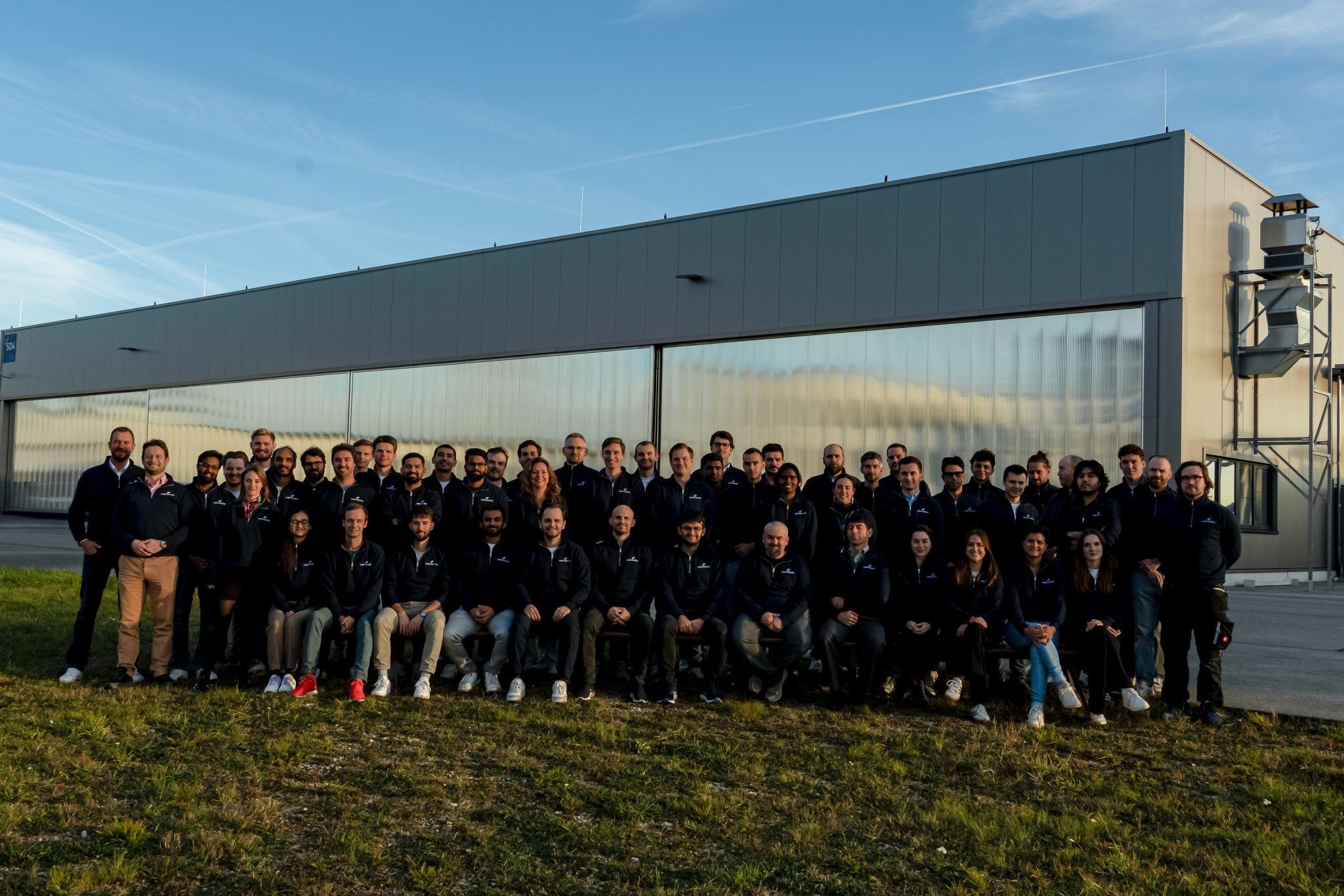
Munich-based electric aircraft manufacturer VÆRIDION has closed a €30 million Series A2 round and been selected for a €94.5 million European Union grant to advance the development and manufacturing of its nine-passenger electric aircraft, the Microliner.
The equity round was co-led by SHIFT Invest and Invest-NL, with participation from existing investors World Fund, Project A and Vsquared Ventures, alongside PAYBACK founder and angel investor Alexander Rittweger and other unnamed investors.
The funding will finance construction of the first conforming Microliner prototype and integrated testing of its battery and propulsion systems. Separately, the European Commission has selected VÆRIDION’s CAROLUS project for a €94.5 million grant under the EU Innovation Fund to support the development of a final assembly facility at Oberpfaffenhofen Airport, near Munich. The grant remains subject to a formal agreement expected in 2027.
Founded in 2021 by Ivor van Dartel, VÆRIDION is developing an all-electric aircraft for short regional routes. Van Dartel, the company’s CEO and co-founder, previously worked at Airbus, including on the E-Fan X hybrid-electric aircraft demonstrator. VÆRIDION is headquartered in Munich, with subsidiaries in Delft and Brussels.
Developing a Nine-Passenger Electric Aircraft for Regional Routes
VÆRIDION’s Microliner is designed to carry nine passengers over distances of up to 400 kilometres under Instrument Flight Rules (IFR). A configuration carrying four passengers targets a range of up to 550 kilometres under Visual Flight Rules (VFR). The company is developing both passenger and cargo versions.
The aircraft combines a glider-inspired wing with modular batteries integrated into the wing structure and a propulsion system that uses multiple electric motors to drive a single propeller. Its design is being developed against the European Union Aviation Safety Agency’s (EASA) CS-23 certification requirements.
VÆRIDION is targeting operating costs below €0.40 per seat-kilometre, which it believes could make short regional flights commercially viable on routes that are difficult to serve with conventional aircraft. This remains a design target rather than a demonstrated operating cost.
According to the company, more than 21,000 small turboprop aircraft currently serve regional routes worldwide, with an average age of 23 years. Rising fuel and maintenance costs have also contributed to the withdrawal of regional air services in Europe.
Over the past year, VÆRIDION has completed its Preliminary Design Review and signed a second Pre-Application Contract with EASA, advancing preparations for certification. The company opened a production and testing facility at Oberpfaffenhofen Airport in March 2026, where it has since powered on its electric engine for the first time.
Its next development stage involves integrating the battery packs and propulsion system into a ground-testing platform known as a copper bird. The results, together with wind-tunnel testing, will inform construction of the first conforming aircraft and preparations for flight testing.
Series A2 and EU Funding to Support Aircraft Production
The €30 million Series A2 will support VÆRIDION’s aircraft development and testing programme. Including the new equity investment and earlier public funding, the company reports approximately €60 million raised to date.
The proposed €94.5 million Innovation Fund grant addresses a separate requirement: establishing the industrial capacity to manufacture the Microliner. VÆRIDION’s CAROLUS project was selected from 358 applications as one of 12 large-scale projects. It was the only aviation project and the only German applicant selected in that category, according to the company.
If the grant agreement is completed, the funding will support the establishment and ramp-up of a final assembly facility at Oberpfaffenhofen Airport.
“Over the past year, we have turned the Microliner from a validated design into hardware, with exceptional capital efficiency,” said Ivor van Dartel, Founder and CEO of VÆRIDION.
The company has also reported commercial commitments for more than 130 aircraft, valued at over €730 million, from regional airlines, charter operators and aircraft lessors. ASL Group is its launch customer, while KLM, BayernLB and TrueNoord participate in its Market Advisory Committee.
VÆRIDION plans to continue engineering the Microliner in Munich and Delft, with aircraft production based in Bavaria. Its immediate priorities are integrated battery and propulsion testing, construction of the conforming prototype and further work towards aircraft certification.
