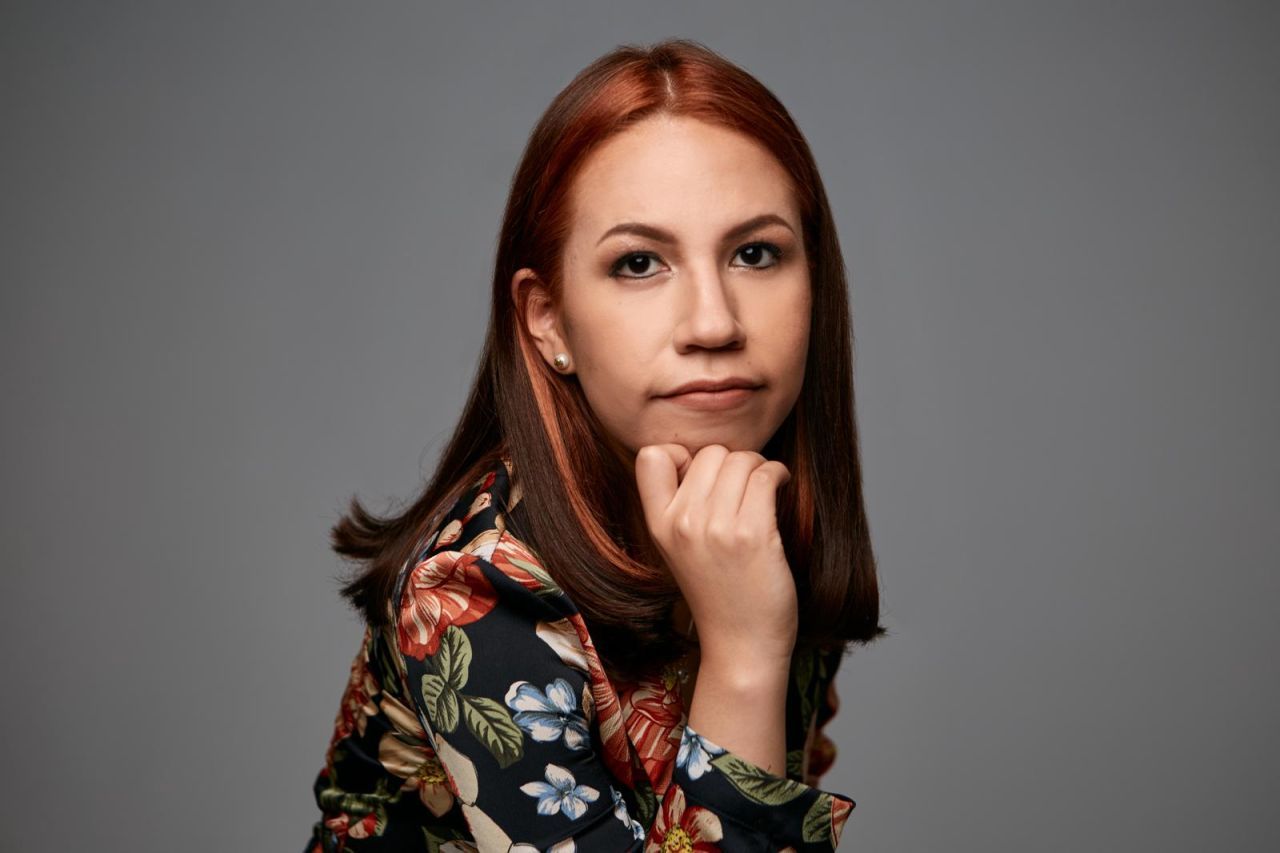
When Anais Cisneros attempted to launch her first fintech startup in 2020, she had a background in financial services, a business education and an MBA from INSEAD. What she lacked was a technical background, connections with technology entrepreneurs and an understanding of how venture capital worked. She began learning to code but eventually abandoned the project and moved into venture capital.
Her experience as an investor led her to establish Amela, a network and learning platform helping women entrepreneurs access capital, develop business skills and connect with other founders across Latin America and Europe.
In an interview with Eva Lanina for The Top Voices’ interview series in partnership with Aurora Tech Award, Anais discussed what she learned from working on both sides of venture capital and how AI is changing the conditions under which founders build and finance their companies.
Access to Venture Capital Starts with Access to Networks
Working in venture capital changed how Anais understood the relationship between investors and founders. She became familiar with the incentives behind investment decisions and began to recognise how much an investor’s professional network could influence the types of businesses they encountered.
During her time as a venture capitalist, Anais recalls that approximately 80% of the pitches she heard came from founders with similar profiles. Even when entrepreneurs from other backgrounds presented strong businesses, the relatively small number of such applications limited the range of opportunities investors could consider.
“I really believe that we need more people to have access to that capital in order to see multiple futures.”
This observation became part of the motivation behind Amela. Anais had met talented women throughout her career in consulting, financial services and business school, yet relatively few were starting technology companies. She wanted to understand what prevented them from doing so and why those who did pursue entrepreneurship often encountered difficulties raising capital.
Amela has since developed from a community into a professional network with educational programmes, including a fundraising boot camp designed to help founders prepare for conversations with investors.
AI Is Changing What Makes a Startup Defensible
When Anais attempted to build her first startup in 2020, learning to code seemed necessary for someone without a technical background. Today, she points to tools such as Lovable and Replit as examples of how much easier it has become to develop software.
For investors, this raises questions about how startups acquire and retain customers when competitors can build similar products. Anais believes that distribution and established commercial relationships can provide a more durable advantage than the technology itself.
“How do you sustain those customers right and how do you make sure that you actually win that revenue and it is sustained over time”
She illustrates this with the example of a healthcare technology company securing a contract with the UK’s National Health Service (NHS). Even if a competitor subsequently develops a better application, replacing an established provider and acquiring such a large customer may prove difficult.
Anais acknowledges that it is still too early to determine which competitive advantages will remain sustainable as AI develops. In the meantime, she encourages founders to concentrate on understanding their customers, reaching them effectively and finding ways to differentiate their businesses from other providers.
AI Opportunities Differ Across Startup Ecosystems
Having worked across Latin America, Europe and the US, Anais sees different opportunities for technology entrepreneurs depending on the technical expertise, capital and existing levels of technology adoption within each region.
In Latin America, she believes there is considerable potential for companies applying AI to existing industries, while the region has yet to develop the depth of technical talent required to compete in certain areas of deep tech. Europe, in her view, has established technical capabilities and opportunities in both advanced AI development and its commercial applications. The US offers particularly strong opportunities for companies developing foundational AI technology.
“I still believe that Latin America has a ton of opportunity in things that are not necessarily super AI it’s more application of AI”
Anais is particularly interested in startups addressing specific problems in industries such as manufacturing, where digital platforms and software have historically had less presence. She is more cautious about businesses whose economics depend heavily on AI computing costs remaining low, especially those using extensive automation that consumes large volumes of tokens.
Regardless of where a company operates, she considers customer demand and the ability to generate sustainable revenue fundamental to its prospects.
Lower Development Costs Create More Opportunities for Women Founders
One of the changes Anais welcomes is the ability to test business ideas without committing substantial resources to product development. She believes this could encourage more women to experiment with entrepreneurship, particularly those who might previously have delayed starting a company until they felt sufficiently prepared.
“I think AI has really given us the ability to try anything with barely any risk”
Anais distinguishes between experimenting with an early idea and running a company that already has customers or external investors. Before taking on those responsibilities, founders have more freedom to test different products, abandon unsuccessful ideas and try another approach.
She also encourages entrepreneurs to reconsider how much they need to accomplish independently. Drawing on her own experience and her work with Amela’s members, Anais has observed that founders who seek relevant expertise and learn from other entrepreneurs can sometimes reach product-market fit, raise capital or build their teams faster.
For Anais, the accessibility of development tools makes this a particularly interesting time for founders who can combine product experimentation with commercial skills such as marketing and sales.
A Founder’s Personal Brand Should Serve a Business Purpose
Anais made a conscious decision to become more publicly visible when she was working as an investor. Publishing content and speaking at events helped potential founders learn about her investment activities and brought new opportunities to her attention.
As Amela developed, public communication became part of how she established trust with prospective members. Sharing her experience allowed her to reach entrepreneurs who might otherwise have been unaware of the network or the support available to them.
“So in my case, I know that’s how I build trust with people for my business. So therefore I do it.”
Anais also recognises the additional demands of maintaining a personal brand alongside running a company. She believes women founders are particularly encouraged to invest time in their public profiles, even when the commercial value of doing so may be unclear.
She sees a stronger case for founder-led personal branding in consumer businesses, where customers may identify with a founder’s story and values. For business-to-business companies, she is less certain that the same investment of time will always produce comparable results.
Her own experience suggests that founders should approach public visibility with a clear understanding of whom they want to reach and what it contributes to their business.
Watch the full interview with Anais Cisneros on The Top Voices YouTube channel.