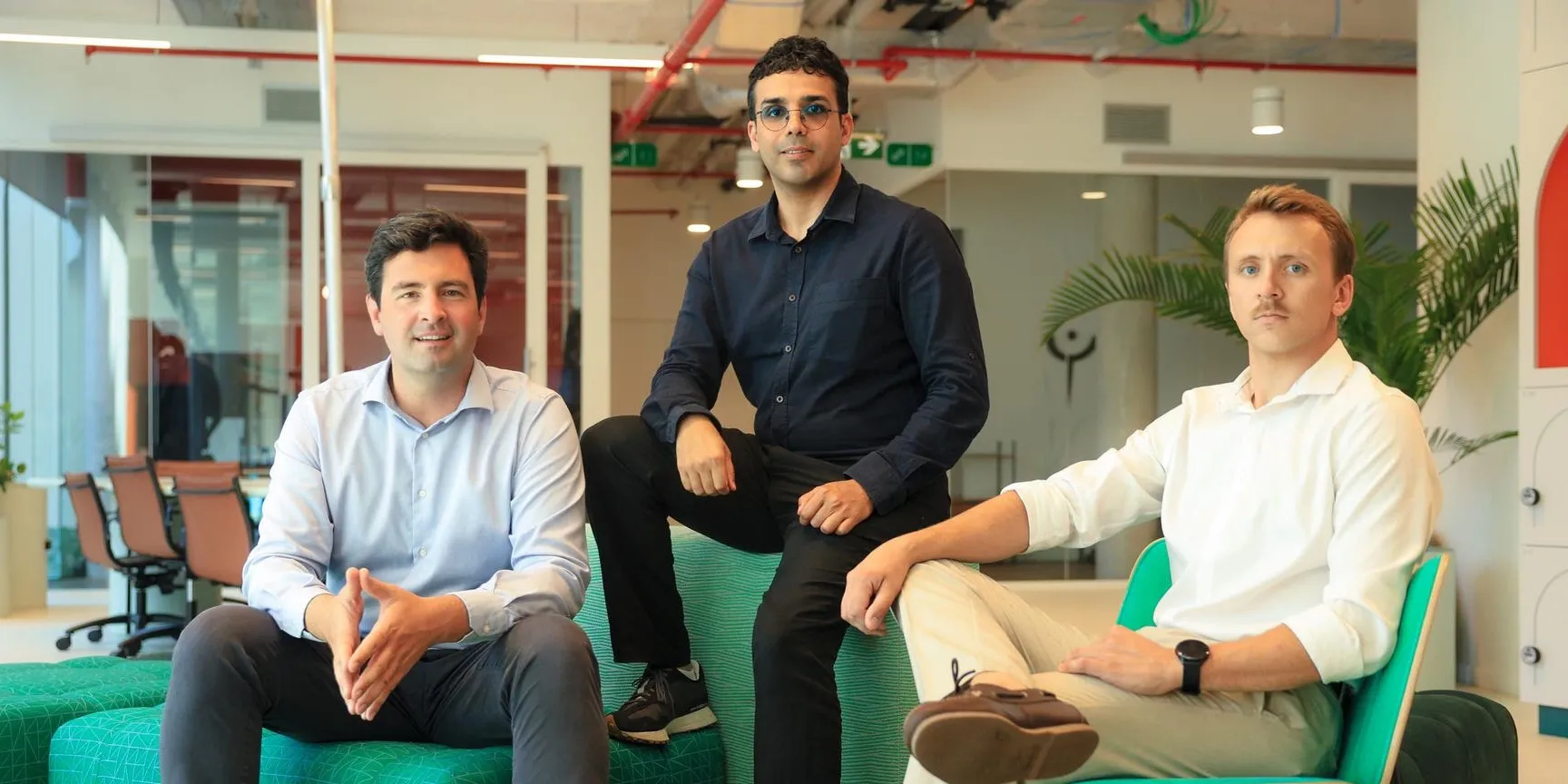
Belgian energy optimizer CIOC Energy has raised €3 million from renewable energy developer CleverNett. The capital will strengthen its commercial and technical team and fund its own market access, so the company can trade directly in Belgium, the Netherlands, Germany and Romania. CIOC Energy acts as a single point of contact for businesses with solar panels and batteries, handling monitoring, control and trading through one platform. Where most optimizers charge a fixed fee or a commission on gross revenue, CIOC Energy works exclusively on a share of the net profit its optimization generates.
Energy has shifted in recent years from a simple commodity into a far more complex affair. Anyone investing in solar panels and a battery ends up dealing with several parties, each managing their own piece without coordinating with the others. An installer places the battery, a control system handles local charging and discharging, and a trader sells the capacity on the energy market. Each of them acts in its own interest. The payback period promised at the point of sale is rarely the one achieved in practice.
"We sold batteries ourselves for years, so we know exactly how fast things can go wrong when nobody's keeping watch," says Alexander De Bièvre, CEO of CIOC Energy. "Without constant follow-up, faults simply go unnoticed. And when something breaks down, everyone points at someone else: the installer doesn't know the software and the control system only carries out what the energy trader decides. In the end, the customer has no idea who to call. Yet every minute a battery or solar panel sits idle is revenue the customer never sees again. As long as nobody takes charge of the whole picture, that value just sits there unused."
One captain
CIOC Energy tackles that fragmentation by positioning itself vertically, combining monitoring, control and trading in one platform under one point of contact. The company built its own control module for the electricity cabinet, steering solar panels, batteries and charging points from a single system. Solar power goes into the battery first, morning peaks get smoothed out when machines and chargers switch on at the same time, and the battery only trades on the energy market when it actually pays off for the customer.
Customers can opt for an energy contract exposed directly to the imbalance market, with control kept separate from the energy supplier. That removes the conflict of interest that arises when the same party both supplies and trades. CIOC Energy compares the return without optimization to the return actually achieved, and charges an agreed percentage on that difference, after distribution and supply costs. If the optimization delivers nothing, CIOC Energy bills nothing. A team in China tests and validates the batteries itself, which helps guarantee their lifespan and availability.
A hundred sites, two thousand homes
CIOC Energy is led by CEO Alexander De Bièvre, who previously founded Sentinel, an IoT company for smart mobility with clients including Lyft, BASF and UCB. Looking for a market with more room to grow, he shifted his focus to renewable energy, drawing on his experience with the energy sector in China. Since its founding in September 2023, CIOC Energy has grown to 24 employees. Part of the team works from China, close to the suppliers in the renewable energy chain.
Today, the company manages more than 100 business sites and, through renewable energy developer and investor CleverNett, another 2,000 home batteries for private households. Its client list includes Burger King and Delhaize, together good for more than 100 megawatt-hours of battery capacity, the daily consumption of around 10,000 households, and 200 megawatt-peak of solar panels, enough to supply roughly 55,000 households with electricity for a year.
To speed up its growth, CIOC Energy is now raising €3 million, led by CleverNett, which takes a minority stake. CIOC Energy remains independent. The capital will strengthen its commercial and technical team and fund its own market access, allowing the company to trade directly on the energy markets in Belgium, the Netherlands, Germany and Romania.
"If you want to trade on the energy market on behalf of your clients, you need to be the one at the controls," says De Bièvre. "We build our own control module, write our own algorithms and test the batteries ourselves at the manufacturers in China. Those three pieces together decide whether an installation actually pays off. The moment you outsource one of them, you lose control over the result, and with it, control over what you keep," says Alexander De Bièvre.
"Most projects in the energy market fail on the combination of hardware, software and a profitable business model. After two years of close collaboration, we know firsthand that CIOC brings all three together in one platform. With this capital, we're speeding up the rollout of flexibility and balancing services in Belgium and taking the model into several European markets," concludes Arthur Despiegelaere, CEO of CleverNett.