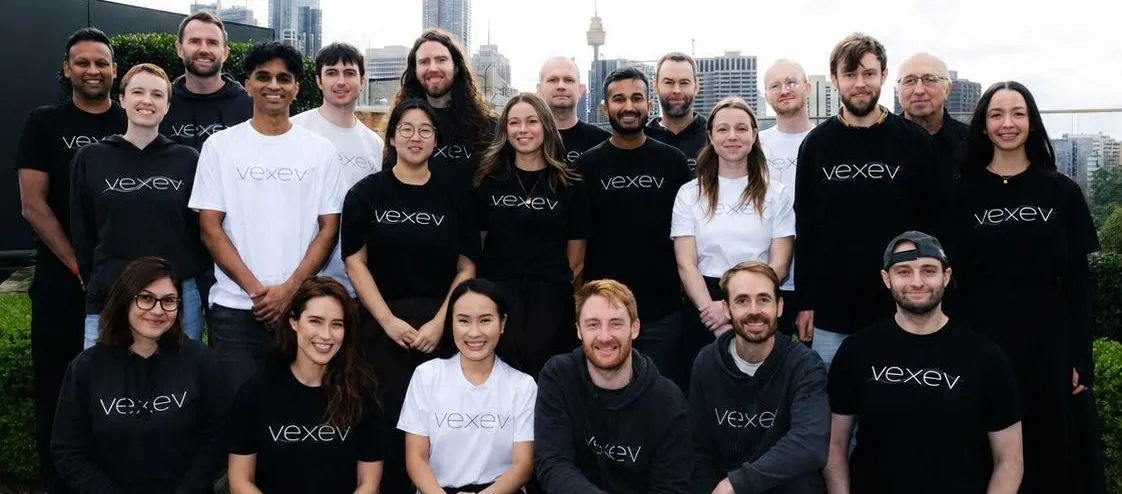
Vexev, an Australian medical robotics company developing autonomous vascular imaging technology, raised $6 million to advance FDA 510(k) clearance and U.S. commercialization of VxWave, bringing total funding to $19 million. Existing investors Blackbird Ventures, Neotribe Ventures, Startmate and Horizon participated alongside new investors TreeArc Investment Group, TEN13, Bioshore Ventures and Alumni Ventures.
Advancing Autonomous Vascular Imaging
VxWave combines robotics, artificial intelligence and ultrasound to automate vascular image acquisition and improve imaging consistency. Initial development focuses on upper-limb imaging for dialysis vascular access, where frequent monitoring creates demand for efficient and standardized imaging without constant specialist availability.
A multi-site clinical study with U.S. Renal Care demonstrated a 94% scanning success rate for autonomous vascular imaging performed by non-specialist clinical staff, providing early clinical validation in routine dialysis workflows.
"We believe high-quality vascular imaging should be available wherever patients receive care, not only when a specialist is available," said John Carroll, PhD, co-founder and CEO of Vexev. "We are starting with dialysis patients because the clinical need is clear, but our vision is much broader: to build an autonomous imaging platform that helps clinicians make faster, more consistent and more informed decisions across vascular disease."
Supporting U.S. Commercialization
The new capital will support regulatory activities, manufacturing scale-up and U.S. commercialization. Future development is expected to extend VxWave into additional applications, including cardiovascular and peripheral artery disease, alongside clinical evidence supporting AI-enabled decision-making.
"Having worked closely with Vexev for several years, I have seen the development of its impressive robot- and AI-based techniques for vascular imaging," said Anupam Agarwal, MD, Senior Vice President for Medicine and Dean of the Marnix E. Heersink School of Medicine at the University of Alabama at Birmingham, and past president of the American Society of Nephrology. "The company's initial focus on dialysis vascular access addresses an important challenge for patients and providers, and I believe this technology has the potential to bring meaningful innovation to dialysis patients with vascular access challenges."