Munich-based SE3 has raised $30 million in Series A funding to expand its spatial intelligence technology for autonomous systems. The round was led by Accel, with participation from Keen Venture Partners, Lakestar and Seedcamp.
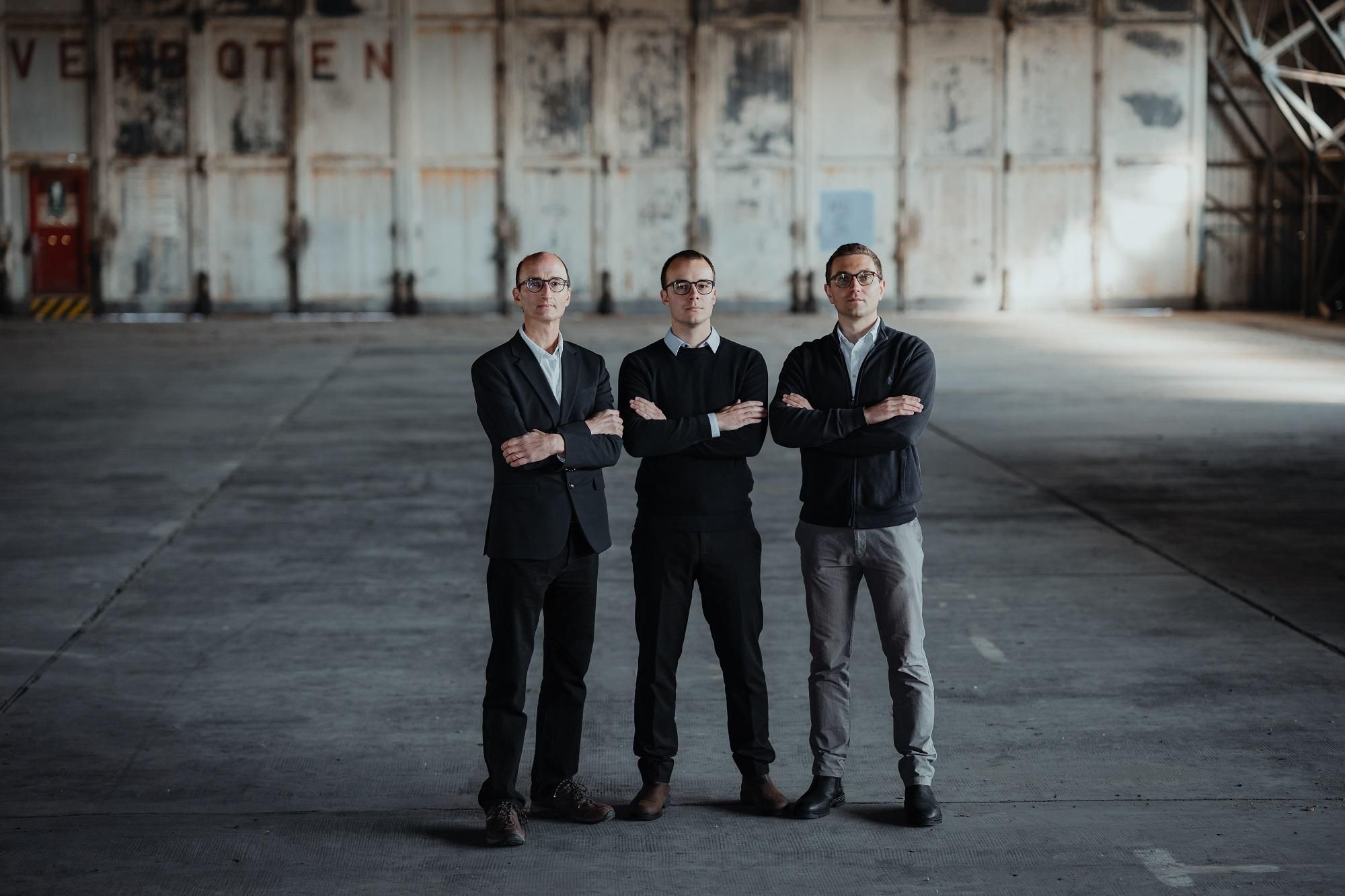
Founded by Lukas Köstler (CEO), Simon Klenk (CTO) and Professor Daniel Cremers (Chief Science Officer), SE3 develops software that enables unmanned systems to interpret their surroundings and operate autonomously. The company originated from Cremers’ computer vision laboratory at the Technical University of Munich (TUM), where Köstler and Klenk conducted doctoral research in computer vision and robotics.
SE3 has shipped thousands of systems over the past two years and is working on multiple contracts involving Ukraine and the German armed forces, the Bundeswehr. The company also collaborates with defence technology manufacturers and developers, including Rheinmetall, HENSOLDT, Auterion and ERC System.
Developing Spatial Intelligence for Autonomous Systems
Autonomous drones and ground vehicles rely on sensors, navigation systems and onboard software to interpret their surroundings. In complex environments, particularly where satellite navigation is disrupted, maintaining reliable positioning and coordinating multiple systems can become difficult.
SE3 is developing a spatial intelligence platform that combines computer vision and AI to process sensor information from unmanned systems. Its software brings data from drones and ground vehicles into a shared three-dimensional representation of the environment, allowing connected systems to operate with a common understanding of their surroundings.
The platform is designed to work across equipment from different manufacturers. Rather than requiring customers to adopt a single hardware ecosystem, SE3 provides a software layer that can integrate with existing autonomous systems.
Its technology supports coordinated operations involving multiple vehicles, using environmental information to adjust routes, positioning and behaviour. Operators can also issue commands through a voice interface, reducing the need to control each system individually.
The software runs locally on the equipment rather than relying on continuous cloud connectivity. This allows autonomous systems to continue operating in environments where communications and satellite navigation may be unreliable.
SE3’s approach is aligned with the growing adoption of modular defence architectures, including the Modular Open Systems Approach (MOSA) and Germany’s MOSABw programme. These frameworks encourage interoperability between systems from different suppliers, allowing organisations to integrate new capabilities without replacing their existing platforms.
$30M Series A to Support European Expansion
SE3 will use the new funding to expand its engineering, commercial and operations teams as it prepares to fulfil additional contracts and scale its technology.
The company plans to strengthen its operations in Germany and Ukraine while establishing a new office in the United Kingdom. It also intends to expand into additional European markets as demand for autonomous systems and spatial intelligence software increases.
Defence remains SE3’s primary commercial focus. The company is already working with European defence manufacturers and technology developers, including Rheinmetall, HENSOLDT, Auterion and ERC System.
“Working in defence means our technology has to deliver under pressure in the field. We keep that responsibility front of mind in everything we do, working closely with the people who rely on our systems when it matters,” said Lukas Köstler, Co-founder and CEO of SE3.
Matt Robinson, Partner at Accel, highlighted the team’s research background and its work on spatial AI for autonomous systems.
“With exceptional talent from one of Europe’s leading research departments, the SE3 team is uniquely qualified to take on the challenge of building spatial AI for autonomous systems,” Robinson said.
Beyond defence, SE3 plans to explore civilian applications beginning in 2027, including robotics and emergency response, where autonomous machines must operate reliably in challenging physical environments.
