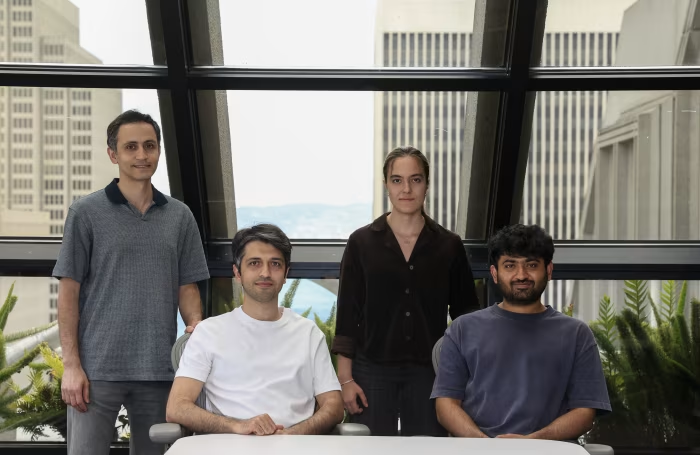
San Francisco-based Mirendil has raised $1 billion in Series A funding to develop AI systems that automate research and engineering tasks. The round was co-led by Kleiner Perkins and Clearlake Capital, with participation from Battery Ventures, Doerr Capital, Gil & Co, Google, M13, Pear VC and S32, alongside other new and existing investors.
Mirendil is developing AI models and software that allow autonomous agents to handle parts of the research process, from writing and testing code to conducting experiments. The company’s work focuses on reducing the engineering effort and computing resources required to develop advanced AI models.
The funding follows the introduction of Mirendil-Base, the company’s first pretrained model, and Fern, a coding-focused model developed through additional training. Mirendil has also launched Lor, a platform that coordinates multiple AI agents working on research and engineering projects.
Using AI Agents to Develop AI Models
Training advanced AI models involves writing code, testing different approaches and running experiments that can take weeks or months to complete. Mirendil is developing tools that allow researchers to delegate more of this work to AI agents while retaining oversight of the research process.
The company recently demonstrated this approach with Mirendil-Base. According to Mirendil, a single researcher working with AI agents pretrained the model from scratch in three and a half months, using less than $10 million in computing resources. The agents handled coding and experimentation throughout the process.
Mirendil subsequently developed Fern, a model designed for coding tasks. It supports context windows of up to 10 million tokens, allowing it to work with large amounts of code and information across extended workflows.
Alongside its models, Mirendil is building Lor, a platform that allows multiple AI agents to work together on research and engineering tasks. The system can coordinate hundreds of agents, enabling them to write code, run experiments and continue working on projects over several days.
Lor is currently available in private beta and is already being used internally by Mirendil. By combining AI models with tools for coordinating autonomous agents, the company is working towards a research process in which smaller teams can manage increasingly complex development projects.
$1B Series A to Expand Autonomous AI Research
The Series A will support Mirendil’s continued development of AI models and research automation technology. The company aims to make advanced AI development more accessible to scientists and engineers who do not have the resources of large AI laboratories.
Its approach is based on using AI agents to carry out technical work that would otherwise require significant engineering time. By automating coding, experimentation and other stages of model development, Mirendil intends to help research teams work on more complex projects with fewer manual tasks.
The company is also looking beyond AI model development. Its longer-term goal is to make these tools useful to researchers working across scientific and technical disciplines, where building specialised AI systems can require substantial expertise and computing resources.
For now, the company is continuing to develop its models and multi-agent platform, with the aim of expanding the range of research tasks that autonomous AI systems can perform.
